¶ Installing Exium Client on Linux
This document describes steps to install Exium Client on Linux. Please make sure you have Linux support enabled in your workspace, follow the steps below.
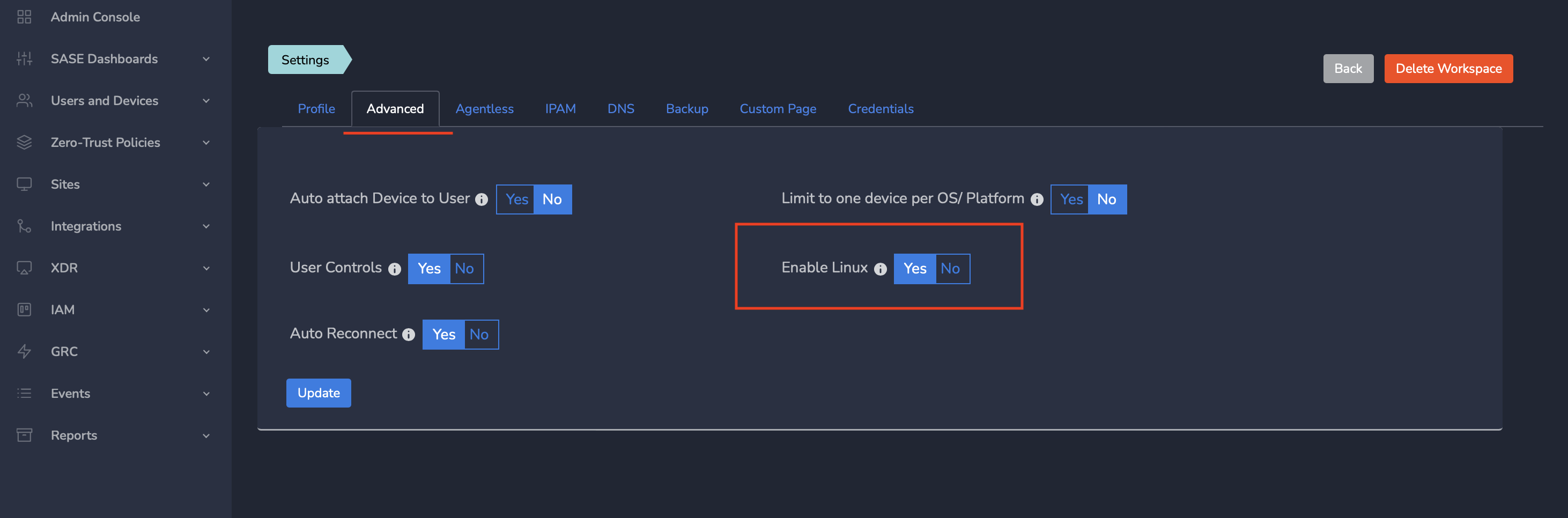
- Navigate to the MSP admin console -> Client Workspace
- Click on Settings → Advanced
- Toggle the “Enable Linux” switch to “Yes” (see screen shot below)
- Click “Update” that will save the settings
Your MSP IT admin would initiate an invite email for you to use Exium client on your device.
¶ 1. Invite Email to Install Client
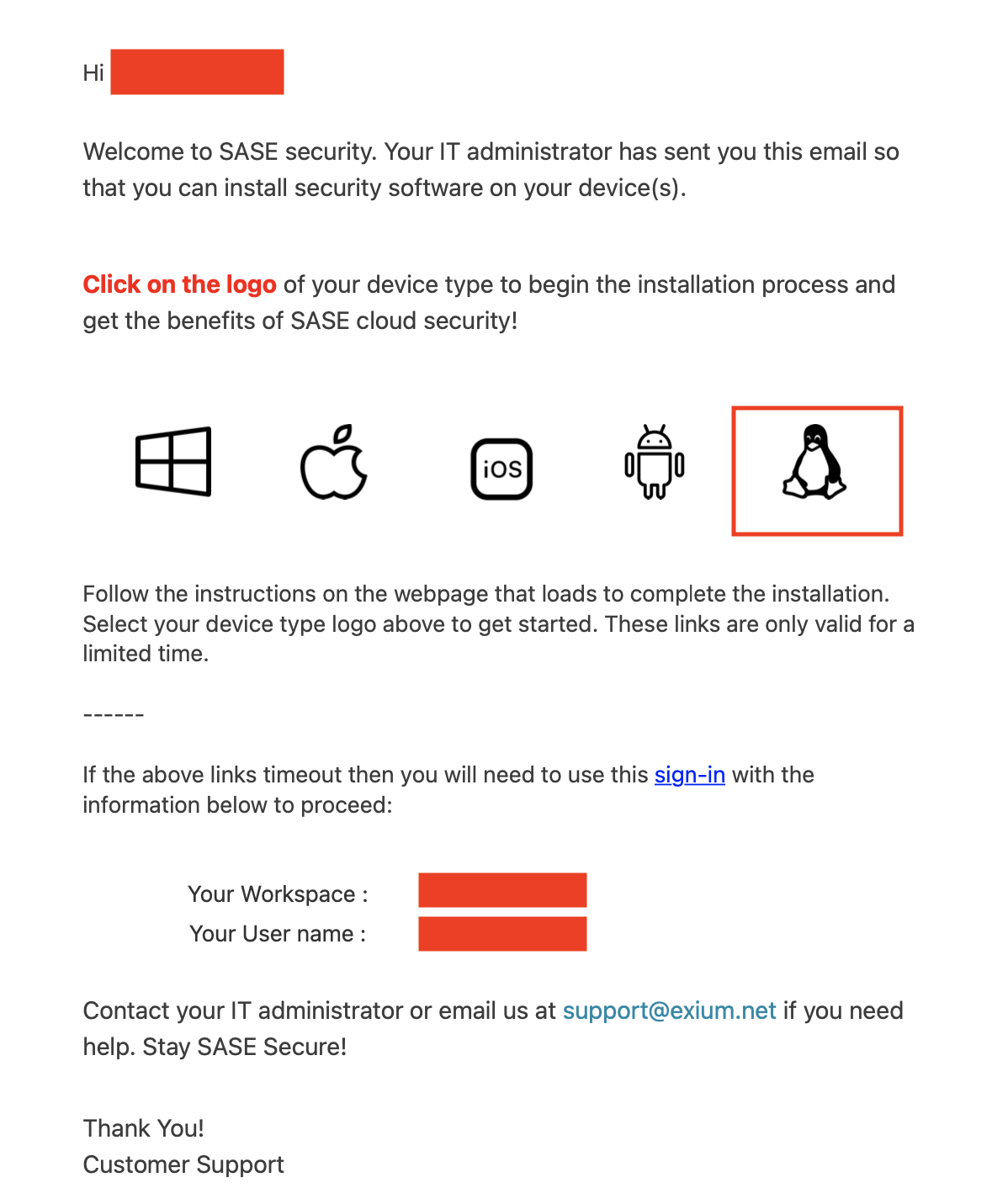
For installing Exium Client on Linux, you Click on Linux icon in the welcome mail as shown below.
Please Note: Welcome email links are valid for 1 hour only. If your link has expired, request a new invitation from your admin.
¶ 2. Download Installer
As next step, on newly opened Page after you have clicked on the Linux icon, copy command as shown below.
.png)
¶ 3. Install Client on Linux VM/Server
- Login to the Linux system where Client will be installed
- Run `sudo -s` to switch to root
- Paste the copied command from Step 2 above to start installation
¶ 4. Installation complete
You will see the following output on console once installation is completed:
Speerity Linux Client Installation Completed and Tunnel configured!For SSO-enabled workspaces, the tunnel is not activated automatically. Run the following command to authenticate and connect:
sase-client connect¶ 4a. SSO Authentication
For SSO-enabled workspaces, the tunnel requires authentication via your organization's identity provider before connecting.
¶ 1. Connecting for the first time:
After installation, run:
sase-client connect
¶ 2. Authentication
An authentication URL will be displayed in the terminal. To open it:
 - Ctrl + Click the URL directly in the terminal, or
- Copy and paste it into your browserComplete the login in your browser and the tunnel will activate automatically.
¶ 3. Checking SSO status:
sase-client statusThis shows connection state along with your SSO session expiry time.
¶ 4. Re-authenticating when session expires:
SSO sessions expire periodically. When expired, the tunnel will disconnect automatically. To re-authenticate:
sase-client connectOr simply run sase-client connect again — it will trigger the SSO flow if your session has expired.
¶ 5. Check Client status
Run the following command to check your connection status:
sase-client status
To verify your traffic is routed through Exium, run the `nslookup` command as below. Server name and Address should point to a DNS server IP starting with 172 and ending in 100.
 root@vm3:~# nslookup google.com
 Server:         172.18.1.100
 Address:        172.18.1.100#53

 Non-authoritative answer:
 Name:   google.com
Address: 74.125.197.101Server name and Address should point to a DNS server IP starting with 172 and ending in 100 as in the above example of 172.18.1.100.
To check the raw WireGuard tunnel state, run:
wg show speerityPlease run command “wg show speerity” to check status of the tunnel

¶ 5. Start/Stop Tunnel
Here are the commands to manage tunnels
 ┌──────────────────────────────┬─────────────────────────┐
 │            Action            │         Command         │
 ├──────────────────────────────┼─────────────────────────┤
 │ Connect to SASE network      │ sase-client connect     │
 ├──────────────────────────────┼─────────────────────────┤
 │ Disconnect from SASE network │ sase-client disconnect  │
 ├──────────────────────────────┼─────────────────────────┤
 │ Check connection status      │ sase-client status      │
 ├──────────────────────────────┼─────────────────────────┤
 │ Re-authenticate (SSO)        │ sase-client reauth      │
 ├──────────────────────────────┼─────────────────────────┤
 │ Refresh WireGuard config     │ sase-client reconfigure │
 ├──────────────────────────────┼─────────────────────────┤
 │ View logs                    │ sase-client logs        │
└──────────────────────────────┴─────────────────────────┘¶ 6. Uninstall
Here are the steps to uninstall Linux client. Copy following command from here and paste it on Linux console.
bash <(curl -sSL https://clientreleases.s3.us-west-1.amazonaws.com/ngclient/linux/speerity_linux_uninstall.sh)To learn more about implementing SASE, XDR, IAM/ MFA, and GRC for your organization and explore tailored solutions that meet your unique requirements, contact Exium at partners@exium.net for a consultation or demonstration. If you are ready to get started, check out our testing and onboarding process.